
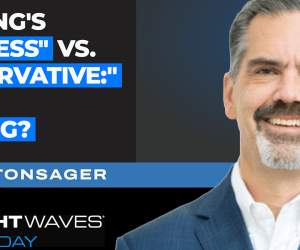

In a lukewarm freight market, not all carriers are feeling the same heat. Craig Fuller and Paul Tonsager dive deep into why Knight-Swift’s ‘ruthless’ approach might be outperforming JB Hunt’s ‘conservative’ strategy, and what this means for the broader trucking and intermodal sectors. Discover the surprising nuances in today’s supply chain earnings.
Knight-Swift’s willingness to walk away from unprofitable freight and lean into spot and one-way traffic is paying off this earnings cycle, while more conservative large truckload carriers such as J.B. Hunt and Werner posted cautious results in a demand environment that FreightWaves describes as lukewarm. The divergence, debated on FreightWaves Today, illustrates how carrier culture — not just market conditions — is shaping financial outcomes in 2024.
Paul Tonsager, CEO and founder of Integrated Multimodal Solutions and a veteran railroad executive, said Knight-Swift impressed him when he listened to its earnings call for the first time. He pointed to the carrier’s reported 89 operating ratio as a figure that would turn heads even in the rail industry, noting that railroads covet their carload business partly because competitive intermodal margins are harder to defend.
Tonsager tied Knight-Swift’s outperformance to its entrepreneurial, operationally disciplined culture — a trait rooted in Knight Transportation’s longstanding reputation before its merger with Swift. Paul Tonsager and Craig Fuller both noted that Knight has historically been “ruthless” about shedding undesirable freight, contrasting that with J.B. Hunt’s more customer-centric approach and its reluctance to push rate increases outside of normal bid cycles. A 34% spread between current truckload and contract intermodal rates underscores the pricing tension carriers are navigating.
“The entrepreneurs will win in this market because they can move quickly to capture whatever gain they can get on price,” Posiger said.
J.B. Hunt’s heavy orientation toward dedicated and contract business — with limited spot exposure — means it is waiting for bid cycles to recoup driver cost inflation that hit intra-cycle, Tonsager argued. Despite the softer quarter, he credited Hunt with having “the best mix, the best balance, and best consistent operations” among large trucking operators, cautioning against reading too much into a single quarter after Hunt posted standout numbers the prior period.
The conversation shifted to the proposed Union Pacific–Norfolk Southern merger, which Posiger estimated at roughly 55-45 odds of STB approval. Norfolk Southern shares were trading around $330–$332, above the roughly $320 price UP offered, signaling market expectation of deal completion. Posiger said a breakup fee of approximately $2 billion would be triggered if the merger fails, giving NS meaningful downside protection similar to what T-Mobile received when its AT&T deal collapsed.
Tonsager flagged the pace of the regulatory process as a risk in itself, noting that more than a year and a half has passed since the merger was announced without a single STB hearing. He warned that the prolonged uncertainty is a distraction for employees on both sides and that concessions may be required regardless of the outcome. With four STB commissioners overseeing an $80 billion deal, and the political backdrop shifting with potential Democratic House gains, both the merger’s fate and the future of railroad mega-consolidations remain unsettled. Tonsager added that a rejection by the current administration would likely push any similar attempt back by a generation.
Knight-Swift’s spot market aggression and 89 OR contrast with J.B. Hunt’s contract-focused patience amid a 34% truckload-to-intermodal rate spread.Tonsager puts UP-Norfolk Southern merger approval odds at 55-45, with a ~$2 billion breakup fee protecting NS if the STB declines.Over 18 months since merger announcement with no STB hearing held; Tonsager warns the slow pace could hurt the deal regardless of outcome.
This Summary is generated thanks to a transcription of the interview, for the full interview please enjoy the video above.
The post Trucking’s “Ruthless” vs. “Conservative:” Who’s Winning? appeared first on FreightWaves.