

The biggest railroad merger in decades is facing stiff opposition, with new data revealing hundreds of errors in traffic analysis. Meanwhile, rail volumes are surging, and trucking capacity is tightening nationwide. We dive into Sonar data to expose the real story behind intermodal contract savings, port rejections, and the growing gap between spot and contract rates, offering critical insights for supply chain professionals navigating this volatile market.
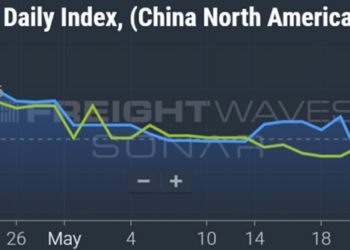
National truckload tender rejections have climbed to 13.68% — roughly double the level from the same week a year ago — and already exceed last year’s December holiday peak, with the seasonal peak still ahead, according to Sonar data cited in a Nov. 24 freight market update. The tightening is sharpest in refrigerated, where reefer tender rejections reached 22.74%, up from roughly 20% in early November and about 13 percentage points higher than a year ago.
The capacity squeeze is not being driven by the import surge at major ports. Savannah, which handled 565,366 TEUs in October — up 25% year over year and the second-highest month ever for that port — posted tender rejections of just 6.95%, about half the national average of 13.68%. U.S. customs imports nationally are up approximately 11% year over year. “The import surge isn’t what’s tightening trucking in this market. The pressure is elsewhere,” said Julie Van de Kamp.
On the rate side, spot truckload rates are sitting at $3.61 per mile, roughly 79 cents above the van contract rate of $2.82 per mile. Van de Kamp noted that diesel fell 3% in the latest week, pointing to capacity — not fuel — as the driver of rising spot prices. With more than one in eight contract loads being rejected, every routing guide failure sends freight to the costlier spot market.
“So again, spot rates continuing to rise is capacity, not fuel driven. So more than 1 in 8 contract loads are getting rejected and every failure costs a premium as it has to go to the spot rate.” — Julie Van de Kamp
Against that tightening backdrop, intermodal is already gaining ground. Sonar’s Intermodal Contract Savings Index shows intermodal rates running 29.6% below the truckload contract rate — nearly double the 16% gap recorded a year ago. The spread peaked near 33.5% in August and has eased since, but remains well above the two-year average of 21.1%. Outbound rail container volume, O-Rail USA, stands at 45,634, about 9% above the same week a year ago and above every prior year on the chart.
That intermodal growth is adding complexity to the proposed Union Pacific-Norfolk Southern merger. Comments on the revised UPNS application were due Nov. 18, and opposition arrived in force. BNSF filed formal opposition citing more than 310 errors in the UPNS traffic analysis. J.B. Hunt is seeking denial of the merger, calling the $1.2 million load annual intermodal forecast overstated, while Schneider is supporting the deal. The merger’s diversion model assumes shippers will strongly consider rail when intermodal matches truck transit plus one day at a 10% lower price — a threshold Sonar data suggests the market has already blown past at nearly three times that price advantage.
Van de Kamp noted that Savannah sits in Norfolk Southern territory, with NS running a direct rail connection to the Gainesville inland port, making the port-to-inland rail flow a central element of the merger’s strategic case. Even so, she argued the data undercuts one of the deal’s core premises: “Intermodal’s already growing without a merger,” Van de Kamp said, adding that the remaining debate centers on service and transit time improvements that UP and NS are promising opponents — not on rate, where rail already holds a substantial edge.
Reefer tender rejections hit 22.74%, already above last year’s December peak, while national dry van rejections doubled year-over-year to 13.68%Intermodal rates are 29.6% below truckload contract rates — nearly double the gap from a year ago — and outbound rail volume is 9% above the same week last yearBNSF cited 310+ errors in the UPNS traffic analysis and J.B. Hunt seeks merger denial, arguing intermodal growth is already occurring without the deal
This Summary is generated thanks to a transcription of the interview, for the full interview please enjoy the video above.
The post Trucking Tightens as Rail Volume Surges appeared first on FreightWaves.