

Sponsored by FoodSafe Drains
Some plant managers already know they have Listeria in their underground piping. Their strategy? Keep it there.
It’s a calculated gamble, but one that’s only getting harder to justify. As food safety regulations tighten and capital investment cycles accelerate, legacy drainage systems are moving from deferred maintenance to material liability. Cracked grates, degraded trench drains, and invisible networks of underground piping aren’t just sanitation headaches. They’re gaps in an otherwise sophisticated food safety apparatus, and regulators are paying closer attention.
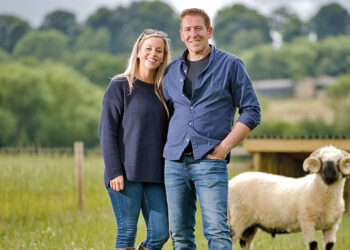
VP of Sales Engineering at FoodSafe Drains
Viking Kristjansson, VP of Sales Engineering at FoodSafe Drains, a division of Global Drain Technologies, works with food and beverage facilities across North America that are grappling with exactly this problem. He’s seen the worst-case scenarios and helped companies build a path out without halting production.
In this conversation, Kristjansson breaks down the real contamination risk behind degraded drainage, how to make the ROI case when you’re competing for capital against automation and AI, and why the plants that invest in hygienic drainage now will be the ones best positioned for whatever comes next.
Q: You mentioned that some plant managers know they have Listeria in their underground piping and their job is “to keep it there.” How common is this mindset, and what’s the real risk of that ticking time bomb going off?
Viking Kristjansson: Plant managers and sanitation engineers are people whose job is to do everything they can to keep their customers safe and their plants clean. However, many of them have not been given the time or resources to replace their drainage. I think it is easy to understand why a plant manager would execute an HACCP plan that includes isolating their underground piping from the rest of their operation in order to prevent contamination.
I would say that I have seen this type of situation more than once but I can’t speak to how common it is across the industry. The plants I see are often worst case scenarios who have made the decision that their contamination risk is too great and have contacted FoodSafe Drains to talk about upgrading to hygienic drainage.
Q: When a plant manager walks the floor and sees broken grates or degraded trench drains, what’s the actual contamination risk versus the perceived “we’ll get to it eventually” risk?
VK: There is always an actual contamination risk all it takes is one employee to touch one of these dirty drains and then the production line to result in a worst case scenario. But, of course, no one can predict the future. Many plants have played the odds with degraded drainage systems for years and won while others have lost.
But the key here is not about whether or not contamination has “X” likelihood of occurring. It is about creating safe systems that are human-proof so to speak. People make mistakes, maybe they are tired one day or maybe they were doing everything right and still had an unavoidable accident. By installing drainage systems that are designed to be hygienic and to prevent contamination we are significantly lowering the risk of a human error. And, of course, we know that the way that regulation has gone, the onus is on the processor to do everything they can to lower the odds of a critical incident. Having cracked or degraded trench drains is not going to comply with a lot of current government regulation as well as industry best practices.
Q: What’s the typical trigger that finally forces plant managers to upgrade drainage. Is it a failed audit, a contamination event, or something else?
VK: Honestly, I think the biggest factor that is leading to these upgrades is just changing attitudes around drainage. The food and beverage processing industry has always been a leader in hygienic design, and I think that the conversation around hygienic drainage is really starting to take off.
Q: How do you make the ROI case for drainage upgrades when you’re competing for capital against higher-profile investments like automation or AI?
VK: One of the biggest drivers of ROI and value is uptime. And it’s not just issues caused by legacy drainage, it’s also cleaning and maintenance time. Installing hygienic linear drainage systems with simple cleaning SOP’s means less time spent by cleaning crews which means more time for production.
Wages are still one of the biggest costs involved in food production. And while that may eventually be solved with AI, I am going to assume that there will still be costs involved with having very expensive robots spending hours cleaning the drains. Just make the drain maintenance friendly and easy to clean from the beginning, and it won’t matter if it is being cleaned by humans or robots.
Most facilities will see the ROI from hygienic drainage come in the form of increased productivity, more product rolling out of the same size facilities through gains in efficiency.
Q: Production schedules are brutal, with most plants running 24/7 with minimal shutdown windows. How do you actually retrofit drainage without halting operations for weeks?
VK: At FoodSafe Drains we created a framework that we call RENEW that focuses on upgrading drainage in existing facilities to increase productivity, lower maintenance costs, and ensure hygienic compliance.
We were very clear while designing the program that the RENEW work has to be able to be completed while the plant is in operation. With this in mind we focus on the amount of time that is realistically available, and we create a plan that works on that schedule.
The RENEW program works on three main pillars:
The FoodSafe Drainage Evaluation Program
FoodSafe Drains Engineering Design and Project Management
The Global Drain Technologies Alliance Partner Network
It all starts when a company reaches out to us to enquire about upgrading drainage. The first step is going to be some level of evaluation of their current drainage and future drainage needs. Our Drainage Evaluation Program offers a multiple tired structure. Clients can select the evaluation level that best suits their needs based on the desired budget and outcomes. Our evaluation is done either through a site visit by one of our engineers or through consultations with experts on the ground.
Once we have a drainage upgrade plan in place, it goes to our design and engineering department and is picked up by an in-house project manager. This team will take all of the recommendations and timeline and work with the end-user to ensure they are correctly implemented and that design staging and delivery all happen within the appropriate windows.
At the same time, one of our Alliance Partners is brought in to perform their own evaluation and perform the installation within the allotted timeline. Often these shutdown windows are just over a long weekend or a holiday. Members of the Alliance Partner Network have been vetted to ensure that they are qualified and can handle all aspects of this type of work. These are experienced tradespeople who know how to work not just with drains but also with concrete and floor coatings to create a fully integrated drainage system and be in and out under tight timelines leaving the facility better than it was before.
Q: For a plant manager inheriting a facility with decades-old drainage, where do you start the assessment? What’s the minimum viable upgrade versus the ideal state?
VK: Our Drainage Evaluation Program is the ideal starting point for anyone dealing with legacy drainage. We offer a tiered system for this evaluation. So the result can range from very simple recommendations like building a cleaning SOP, replacing strainer baskets and maybe some grate covers to a complex solution like a full drainage replacement.
When we go for the full option, it is important to keep in mind that, because of shutdown windows, this type of work might be staged out to take place over months or even years to accommodate the facility’s timelines. So really the minimum viable upgrade vs. the ideal state is going to be based on a lot of factors including, budget, goals and risk tolerances and those things need to be decided by the company’s major stakeholders.
Q: Looking ahead, what’s changing in drainage technology that plant managers should be planning for now, especially as facilities move toward fully digital operations?
VK: I think that the future state for drainage incorporates two different kinds of technologies.
The first is physical design. We changed the industry with our slot drain product which I think really pushed the standard for hygienic drainage to new levels because of its presloped, rounded drain body and accessible maintenance friendly design. And we continue to work in terms of both engineering and manufacturing to iterate on these designs to come up with drains that are so smooth and well designed that bacterial harborage is nearly eliminated.
On the other hand, I think that electronic monitoring systems combined with robotic or AI enabled cleaning will allow for hygienic drainage to become truly self-cleaning and to reduce maintenance times and contamination risks even further to the point where we might one day have fully autonomous drainage systems.
So, really, preparing for the future of drainage is about starting to adopt hygienic drainage systems today so that your facility is prepared for the next wave of innovation in autonomous drainage.