

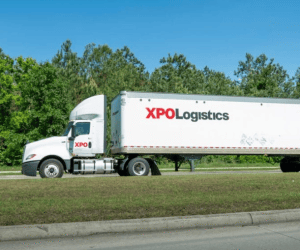
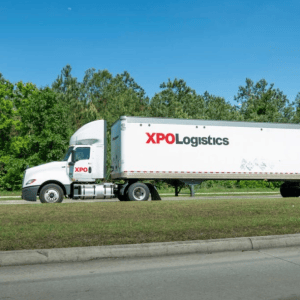
LTL carrier XPO is now an investment-grade credit at one of the three major ratings agencies.
Fitch Ratings has upgraded its rating on XPO (NYSE: XPO) to BBB-. That is one notch above the cutoff between investment-grade and non-investment grade debt.
It comes just a few months after both Moody’s (NYSE: MCO) and S&P Global Ratings (NYSE: SPGI) raised their ratings on XPO by one notch, BB+ at S&P Global and Ba1 at Moody’s. Both those grades are considered equivalent, but they are also both below the cutoff between investment grade and non investment grade debt.
Fitch first rated XPO in March 2023. Its first grade was BB+. It held that rating until the most recent change.
“The upgrade reflects robust operating and commercial execution and structural improvement in XPO’s business and cash flows at a pace above the industry,” Fitch said in its report released late last week. “Significant gross debt repayment shows swift, meaningful commitment to publicly stated leverage targets in 2026.”
As a publicly-traded company, XPO’s financial situation is well-known, unlike companies that are privately-held but which have publicly-traded debt.
Between the third quarters of 2025 and 2026, XPO saw its revenue rise 12.4% to $2.37 billion, saw net income climb to $181 million from $82 million, and improved its adjusted operating ratio to 80.1% from 82.7%.
But from the perspective of a ratings agency like Fitch, a more important number would be that in the nine months ending September 30, its repayment of debt climbed to more than $1 billion from $50 million in the corresponding period of 2025.
Cash flow also is king for ratings agencies, and Fitch liked what it sees at XPO.
“XPO’s financial flexibility benefits from stronger free cash flow (FCF), which Fitch forecasts at around $500 million in 2026 and 2027, on a Fitch-calculated basis, up from about $270 million in 2025,” the agency said. Fitch noted that it has a proprietary method for measuring cash flow.
Two key benchmarks–EBITDA and EBITDAR to debt, with the R in EBITDAR representing rent costs–will be in the low 2.0X range this year at XPO, Fitch said. That is down from 2.8X and 2.7X, respectively, from the 2025 figure. “The announced focus on internal initiatives over large inorganic growth and balanced debt and equity repurchase deployment in 2026, indicated a strategy to maintain leverage,” Fitch said.
Fitch made comparisons of XPO’s debt ratings to three other companies. One is Brink’s of armored car fame, but the only overlap is that they transport something, though what Brinks is hauling isn’t what one would find in the back of an LTL truck.
The two other comparisons were to TFI International (NYSE: TFII) and Forward Air. Fitch does not have a rating on TFI International. But it said TFI’s historical average debt load is in the mid 1.0X to low 2.0X range. Forward Air, on the other hand, is now forecast to have recorded a debt load of more than 6.0X in 2026, improving to mid-5.0X range in 2028.
Forward Air’s (NASDAQ: FWRD) rating at Fitch is B with a negative outlook. That is five notches less than the new rating for XPO at Fitch.
The outlook on XPO is stable, which means an upgrade or downgrade is not likely in the foreseeable future.
In recent years, the reports of ratings agencies about the state of trucking have been pessimistic, with LTL carriers getting just a slightly more optimistic outlook.
But the Fitch report was upbeat on the prospects for the LTL sector.
“Fitch expects the LTL industry’s profitability to be resilient through business cycles,” it said. “This reflects the competitive barriers tied to established asset-based networks. XPO and other large LTL operators have demonstrated a higher degree of pricing rationality through freight cycles relative to the truckload market. Contractual relationships in LTL also offer some additional cyclical stability over spot truckload markets, though typical contract tenors are one year.”
XPO’s stock is up about 36.7% in the last year. It’s up about 3% in the last month and down about 7% in the last three months.
XPO does not pay a dividend. In its notes about developments that could change its rating on XPO, Fitch mentioned “a deviation from capital allocation plans, such as initiating a large dividend or mergers and acquisitions (M&A) strategy that restricts financial flexibility.”
XPO’s last significant acquisition was for real estate being divested by the bankrupt Yellow Corp. in 2024.
More articles by John Kingston
Teamsters say they’ve organized Amazon employees in Indiana; company demurs
Transportation committee in House set for overhaul post-election
New cyber thief gang targets transports; Hunt, Ryder and Echo hit
The post One of 3 ratings agencies now has XPO as investment-grade appeared first on FreightWaves.