If you’re running trucks and not pulling oil samples, you’re missing a critical opportunity to catch something before it becomes a bigger issue. Oil samples are one of the cheapest, most reliable ways to see inside your engine without tearing it apart. Too many small fleet owners and operators look at oil changes as a simple drain-and-fill job, but miss the chance to gather the kind of information that can save them from a $15,000 overhaul or worse. An oil sample report tells a story—about wear metals, contamination, and additives. Learn to read that story, and you’ll spot engine failures before they strand you on the side of the highway or eat your profit margin alive.
Why Oil Samples Matter
Your engine is always shedding tiny amounts of material as it runs. Bearings, pistons, cylinder liners—they all wear, and those particles end up in your oil. On top of that, soot, coolant, fuel, and water can sneak into the system. Left unchecked, those contaminants accelerate wear and shorten the life of the engine. Oil analysis doesn’t just say your oil is dirty. It identifies the type of dirt, where it’s coming from, and how quickly the problem is progressing. That turns a mystery breakdown into a predictable event you can manage.
Think of it this way: a doctor uses bloodwork to find issues you can’t see yet. Oil sampling is your truck’s blood test. Skip it, and you’re guessing. Run it consistently, and you’re managing with facts.
What an Oil Sample Report Actually Tells You
An oil sample report breaks down into categories. Each one is a clue:
Wear Metals – Iron, copper, lead, chromium, aluminum. These tell you what part of the engine is wearing. High iron points to cylinder liners, copper shows bearing wear, lead may signal main bearings, and chromium can mean ring or liner wear.
Contaminants – Fuel dilution, coolant, dirt, and water. Fuel in the oil thins viscosity and wrecks lubrication. Coolant points to head gasket leaks or liner issues. Dirt usually signals an air filter problem, which eats cylinders alive.
Additives – The sample will also show if the additives in the oil—zinc, calcium, magnesium—are still active. This tells you whether your oil change intervals are realistic.
Viscosity – Is the oil still the grade it started as, or has it broken down? Thin oil loses protection, thick oil stresses pumps.
Each report isn’t just a yes or no. It’s a trend line. One high copper reading might be noise. Three samples in a row trending upward? That’s a warning.
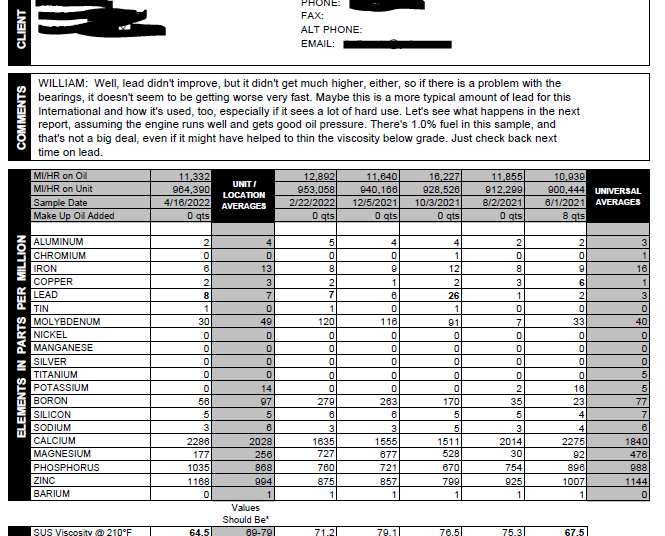
(Photo: The Truckers Report: This isn’t just a lab report — it’s an early warning system. High lead levels like these can indicate bearing wear before it shows up on the road. Oil sampling gives you time to fix small problems before they become engine failures.)
How to Build a Routine Sampling Program
Pulling one sample isn’t enough. You need consistency. Here’s how to build a routine that actually works:
Sample On Regular Milestones– Don’t skip. Sampling only sometimes won’t give you trends.
Pull Samples Correctly – Take the sample mid-drain or with a vacuum pump, not from the bottom of the pan where sludge settles and the gunk lives. A bad sample gives you bad data.
Use the Same Lab – Different labs use different baselines. Stick with one so your numbers stay consistent.
Track Reports in a Log – Keep every report tied to that engine’s VIN. Build a trend history you can review quickly.
Set Review Intervals – Don’t just collect reports. Have a set time—yearly or quarterly—where you or your maintenance manager reviews them side by side.
The more disciplined your program, the easier it becomes to spot issues early.
How to Read and Act on the Numbers
Reports usually come back color-coded—green for normal, yellow for caution, red for critical. Don’t panic at one yellow. Look at the pattern. Is copper up one time and back down the next? Or is it climbing sample after sample? Trends matter more than single numbers.
When you see a yellow or red trend:
Confirm the Data – Pull another sample to verify it’s not a bad pull.
Schedule Inspection – Don’t ignore it. Get a mechanic to check the suspected component.
Adjust Maintenance – If your oil additives are depleting too fast, shorten your oil drain intervals.
Document the Action – Keep notes on what you found and fixed. This builds a history that helps you manage the asset long-term.
The goal isn’t just spotting issues. It’s closing the loop—sample, read, act, document.
Oil Sampling as a Business Tool
This isn’t just about engines. Oil sampling changes your business math:
Predictability – You plan repairs instead of reacting to breakdowns.
Resale Value – Buyers pay more for equipment with a full sampling history that shows the engine is healthy.
Extended Drain Intervals – Confidently push drains longer when reports show the oil is still strong, saving you thousands a year across a fleet.
Risk Reduction – No surprises on the road means fewer tow bills, late deliveries, and downtime costs.
The numbers from an oil report aren’t just technical. They’re financial. They decide whether your truck makes you money or eats it.
FINAL WORD
Oil sampling isn’t optional if you want to run like a professional. It’s the cheapest form of insurance you’ll ever buy for your engines. An inexpensive test tells you more than a mechanic can without tearing the motor down. But it only works if you’re disciplined—consistent sampling, organized tracking, and acting on the data. If you skip, you’re gambling. If you commit, you’re running with clarity. Build oil analysis into your maintenance routine, treat every report like a performance review for your engine, and you’ll cut failures before they ever see the highway. That’s how you protect uptime and profit.
The post How to Use Oil Sample Reports to Predict Failures Before They Happen appeared first on FreightWaves.