
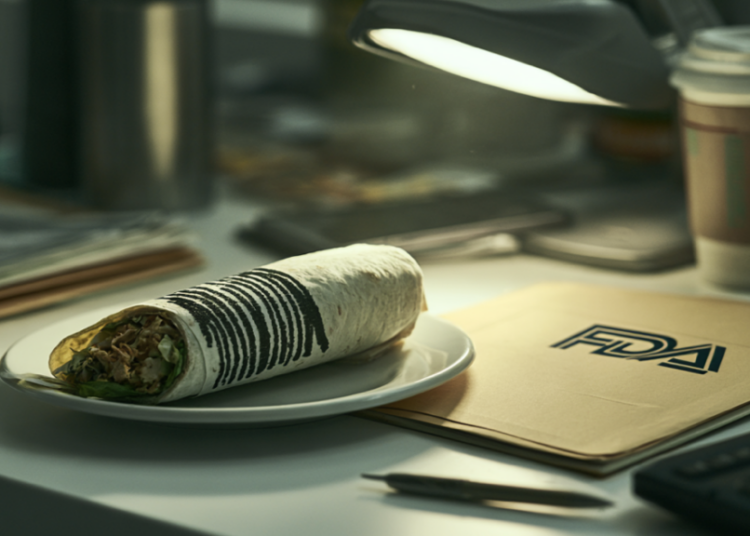
Fifty people have been sickened with E. coli O157:H7 in a multistate outbreak that FDA and USDA’s Food Safety and Inspection Service are investigating together as reference #1421 (USDA 2026-04). The government knows the product. It knows the retailer. It knows who made it. Federal investigators have been inside the supply chain. Receipts have been collected. Genetic sequencing ties the sick together.
And the public investigation table still reads, in its entirety: “Multi-ingredient wrap with chicken (suspect).”
No brand. No retailer. No manufacturer. No states. No hospitalization count. No ingredient. No recall, no advisory, no public health alert. The public learned these were Trader Joe’s Tarragon Chicken Salad Wraps from a federal lawsuit my firm filed on October 15, Gottlieb v. Trader Joe’s Co., not from either agency charged with protecting it.
Based on what I have learned in this case, the wraps were made for Trader Joe’s by F&S Fresh Foods of Vineland, New Jersey. F&S’s quality staff reached out directly to one of my clients. Neither FDA nor FSIS has said a word about F&S. Neither agency has said whether the contaminated ingredient went into other products F&S makes for other retailers.
Let me be blunt. The public’s right to know who made fifty people sick should not be left up to a lawyer on an island off the coast of Seattle filing a lawsuit. That is the government’s job.
The stated reason: the wraps were “proactively removed from the market” and are past shelf life. Because the removal was never called a recall, it was never classified. Because it was never classified, no list of stores was ever published. A disclosure rule that attaches only to the word “recall” can be avoided simply by not using the word.
This is simply wrong. And it is not new.
The government has named names before – when it wanted to
FDA’s position is that the name of a company linked to an outbreak is confidential commercial information unless a recall attaches to it. Its own history says otherwise. In at least eight investigations since 2006, FDA, CDC or a partner agency named the farm, the processor or the brand after the product was already out of commerce or past shelf life:
In 2006, after the Dole spinach outbreak sickened at least 205 and killed at least three, the government named the processor, the ranch, the farming company, the growers of other fields and even the fertilizer maker, six months after the recall. In 2013 it named Taylor Farms de Mexico in a Cyclospora outbreak after the salad mix was likely gone. In April 2018 FDA named Harrison Farms of Yuma when the romaine was past its 21-day shelf life, and the field was in grass. In July 2018 it named Fresh Express when the package dates had passed. In December 2018 it named Adam Bros. Farming, which had not shipped romaine in weeks. In 2021 it named Josie’s Organics spinach and Simple Truth and Nature’s Basket salads after their best-by dates. In 2022 it named FreshKampo and HEB strawberries while saying they were past shelf life.
And here is the one that should sting most. In 2013, 33 people were sickened by E. coli O157:H7 in chicken salads made by Glass Onion Catering and sold at Trader Joe’s. CDC named both companies. FSIS published a recall listing the Trader Joe’s products by name. Same retailer. Same kind of product. Same pathogen. Same agencies. Thirteen years later: silence.
FSIS still names when it wants to. In May 2026 it issued a public health alert naming The Kebab Shop restaurants and the producer of beef kofta that had been made four months earlier and was no longer available. That is FSIS’s routine: when product is gone, issue an alert and name the establishment. In the chicken wrap investigation, it has issued nothing.
Meanwhile, silence has become the default on the produce side. In fall 2024, a romaine E. coli outbreak (#1280) sickened 89, hospitalized 36, put seven into kidney failure and killed one. FDA closed it with one word: romaine. The traceback documents, when finally released, showed it converged on a single processor and a single grower. The public got those names more than a year later, through records requests. In September 2026 FDA closed another romaine outbreak (#1382), 14 sick, past shelf life, no recall, no name. Yet the same year, in a Salmonella cantaloupe outbreak (#1366), FDA named the importer and two Guatemalan growers. The difference was not shelf life. It was whether a recall happened to attach.
When the decision whether to tell the public depends on the mood of the day and not a written rule, no one can predict it, no one can review it, and the public loses.
Two petitions to fix it
I have prepared two companion citizen petitions to FDA. They are not yet filed. I want more eyes on them first.
Petition One: Outbreak Firm Disclosure. This petition asks FDA to establish, by notice-and-comment rule, that the name and location of a firm implicated in a foodborne illness outbreak is not confidential commercial information when epidemiology implicates the food and traceback or lab evidence, including whole genome sequencing, points to the firm. In the same rule, it asks FDA to make a firm’s identity and distribution information disclosable whenever an outbreak food is pulled from commerce, whether the company calls it a recall, a market withdrawal, a stock recovery or a “proactive removal,” and whether it is past shelf life. It asks that the rule put the burden on a firm seeking secrecy to prove a real trade secret, in writing and on the record, while giving a firm one business day to correct factual errors and requiring a prominent public correction if a named firm is later cleared. It reaches the whole supply chain – grower, harvester, cooler, processor, manufacturer, distributor, importer and retailer – because lettuce in a restaurant salad has no brand on it. Until the rule is final, it asks FDA to use the authority it already has under section 705(b) of the Food, Drug, and Cosmetic Act to name firms now. It asks FDA to publish case counts, states, onset dates, hospitalizations and HUS cases for open investigations, and to name the suspect food – and, for a multi-ingredient product like a wrap, the ingredient under investigation – once traceback begins. And at closure, it asks FDA to say whether traceback converged and on whom, and to publish its outbreak summaries without redacting the names.
Petition Two: Recall Consignee Lists and Classification. Since a 2008 rule, USDA has published the names and locations of stores that received meat and poultry in Class I recalls. If you bought recalled ground beef, you could find out whether your store got it. If you bought recalled cheese, sprouts, cantaloupe or bagged salad, you usually cannot. Congress told FDA in 2011 to consider following USDA. FDA wrote guidance that binds no one and applies mainly to foods you cannot identify from the package. This petition asks FDA to require, by rule, publication of retail consignee lists in every Class I food recall, at the time of the announcement and updated as stores are identified; to extend those lists to restaurants, caterers, schools, hospitals, nursing homes and prisons; to classify every recall within ten days and publish the date; and to connect each recall record to the outbreak it is tied to. Critically, it asks FDA to confirm that pulling a food identified as the suspected vehicle of an outbreak is a recall under FDA’s own regulations, no matter what the company calls it. That closes the exact door Trader Joe’s wraps walked through.
States are already doing this. California named the forty-one San Diego County stores that received Happy Hens eggs this year. Washington named an implicated creamery and its cheeses during an open investigation. Federal silence protects no one. It just leaves a record that is incomplete and useless to a national buyer.
There is a pending petition from Stop Foodborne Illness on the same core question, and I support it. FDA’s July interim response said only that the issues were “complex.” The Senate has passed S. 4974, which would authorize disclosure but would not require it or say when. These petitions supply the written standard either way.
Why this matters to everyone, including industry
When the government names a commodity and stops, consumers avoid the whole commodity. Every grower and processor who did nothing wrong pays for the one who did. A firm-specific disclosure is the only thing that separates them. Disclosure is not punishment; it is prevention. It lets a buyer weigh a supplier’s history, an insurer price it, a doctor ask the right question, and a company find its problem before the next season. Withhold the name, and every outbreak looks like the first one anyone has ever had.
Read them. Tell me what you think.
I want comments from public health officials, the produce and retail industry, consumer advocates, lawyers, academics and anyone who has ever been sick and wanted to know why. If you would like to review either or both petitions before they are filed, email me at bmarler@marlerclark.com and ask for the petitions. I will send them to you. Please get your comments back to me before October 30, 2026, so I can incorporate them before filing.
Fifty people are sick. The government knows who made the wraps. The only people kept in the dark are the rest of us, unless a lawyer on Bainbridge Island happens to file suit. That is no way to run a food safety system. Let’s fix it.