


The trucking industry is bracing for a wave of “nuclear judgments” following a massive $604 million verdict against an operating transportation company. This isn’t an isolated incident; it’s a sign of a looming crisis where brokers are increasingly targeted by plaintiff attorneys. Find out how this shifting legal landscape will impact operations, compliance, and profitability for freight businesses.
A $604 million nuclear judgment — the largest ever against an operating transportation company — has placed freight brokers squarely in the crosshairs of plaintiff attorneys, with C.H. Robinson among the defendants in a case stemming from a six-car pileup that killed the truck driver. The motor carrier involved, Lupus Superior, is widely expected to be unable to satisfy the judgment, potentially leaving C.H. Robinson exposed under the legal principle that solvent defendants must cover what insolvent ones cannot.
The verdict marks what industry observers are calling the beginning of a sustained wave of broker-targeted litigation. Brokers handle at least one-third of all for-hire truckload freight, meaning at least one-third of all accident-related lawsuits statistically involve a broker. Plaintiff attorneys have taken note, with legal commentator Matt Leffler cited as saying attorneys now have a fiduciary obligation to their clients to pursue brokers as defendants.
“A lot of the brokers have played as riverboat gamblers,” the speaker said, drawing a direct parallel to the incentive structures that fueled the 2008 financial crisis. He noted that Goldman Sachs, Morgan Stanley, Bank of America, and Merrill Lynch all “played fast and loose” when incentives allowed it — and argued freight brokerage is operating under the same dynamics today.
“When you maximize margin, your incentive is to drive to find the cheapest priced motor carriers in the market. Compliance has an expense. Compliance has a cost.”
That margin-maximization incentive has historically pushed brokers toward lower-cost carriers, including so-called chameleon carriers — operators that shut down quickly after accidents, leaving brokers liable when judgments cannot be collected. The speaker said brokers are now revising underwriting criteria to favor larger motor carriers with bigger insurance policies, precisely because those carriers are less likely to disappear after an incident.
Beyond headline nuclear verdicts, the speaker — whose brother is described as the former CEO of U.S. Express — warned that the volume of small claims will compound the burden. A large carrier can receive over 1,000 legal notices in a single year, ranging from dock door damage to major crashes, with $15,000 to $20,000 matters each requiring local counsel. With federal preemption no longer available as a defense, brokers now face that same volume of low-level litigation in addition to catastrophic verdict risk.
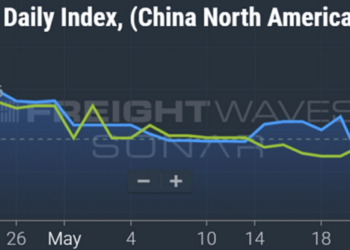
Separately, the speaker addressed Martin Midstream Partners’ latest earnings, noting that refrigerated contract rates have shown 0% movement over the past year compared to a 19% increase in van truckload contract rates over the same period. Refrigerated spot rates are up 51%, but Martin’s book is largely contracted and dedicated, limiting its exposure to the spot recovery. The speaker attributed the underperformance partly to carriers locking in rates prematurely during false-start recoveries in 2023 and 2024, but said significant operating leverage remains ahead for Martin and other large refrigerated carriers as market conditions have now clearly shifted.
A $604M nuclear verdict involving C.H. Robinson — the largest ever against an operating transportation company — is expected to spur a wave of broker-targeted lawsuits as plaintiff attorneys exploit the absence of federal preemption.Brokers handling at least one-third of all for-hire truckload freight face compounding legal costs, from catastrophic verdicts to thousands of small claims annually requiring local counsel.Refrigerated contract rates are flat year-over-year versus a 19% rise in van truckload contract rates, though refrigerated spot rates are up 51%, pointing to deferred but significant operating leverage ahead.
Speaker 1 [0:00] It’s the weekend after the biggest ever nuclear judgment against an operating transportation company, the $604 million nuclear judgment that involves C.H. Robinson. Now, C.H. Robinson is a part of the overall group. It’s not solely responsible for it. But if you look at the way the court system works, if one defendant can’t pick up the bill or pay the judgment, then the other ones must. And so this is a very interesting set of issues that’s going to involve a lot of different parties and a lot of different and substantial impacts. So what we’re talking about here is an accident that happened. There was a 6-car pileup. The truck driver actually passed away. And basically this motor carrier, Lupus Superior, ended up basically in a situation where it’s unlikely to pay out the judgment. And so let’s talk about where we’re at. I think there’s a lot of things here to discuss. One is this is just the start. We’re going to see a lot of these judgments come about over the next couple of years and many times over. The fact is that brokerage is at least a third of all truckload freight handled in the for-hire market. Brokers handle at least a third of it. So just in terms of sample size, at least one-third of all accidents and lawsuits are going to involve a broker. And plaintiffs’ attorneys have figured this out. They are paying attention to the market, they’re watching the market, and they’re looking at how can they go get the biggest dollars. In fact, Matt Leffler says they have a fiduciary obligation now to their clients, i.e., the plaintiffs, to go after brokers. And so you’re going to see these lawsuits pile up. We’re not just talking about the judgments, we’re talking about the legal fees to defend them. And when you talk about years of lawsuits and appeals, you’re talking tens of millions of dollars that are going to be involved in just defending these lawsuits. So brokers are going to have a significant challenge of just navigating this. I’ve talked to a number of brokers over the last couple of days, and what I’ve heard is that plaintiffs’ attorneys are bypassing the smallest operators when there’s an accident and going right to the broker simply because they— that’s where the money’s at. Talked to other brokers that are just trying to figure out what this means for them. Some of them are changing their underwriting criteria to look for bigger motor carriers. 2 reasons for that. One is that motor carrier has bigger insurance policies. The second is, if something happens, the broker’s not likely to just fade away. Remember, if you are dealing with a motor carrier that is non-compliant and just shuts down, a chameleon carrier, then the problem is when there is a judgment against that motor carrier, you’re on the hook because that company may not have active insurance or may shut down the next day. As a chameleon carrier, you’re on the hook if you’re a broker and use them. So this is a big issue. The thing reality comes down to the fact that a lot of brokers, the incentive structure was set up to benefit them in terms of maximizing margin. This is the classic way of, you know, you get your rips, And therefore, when you maximize margin, your, your incentives is to drive to find the cheapest priced motor carriers in the market. Compliance has an expense. Compliance has a cost. The larger enterprise motor carriers were not taking the same levels of risk that the smaller operators did, particularly these chameleon carriers and these low-quality operators were often far cheaper. Than their fully compliant competitors. And therefore, brokers had an incentive to go hire the cheapest motor carrier. And that’s why we’ve seen things like SuperEgo and, you know, the lawsuits involved in C.H. Robinson with those. We’ve seen this Lupus Superior, which reports suggest that it also may have very similar sort of makings of a, of a chameleon carrier network. As we’ve seen in multiple different lawsuits, those carriers are definitely not making the same levels of investment in safety, compliance, technology that you see with the larger enterprise motor carriers. Quotes in terms of what I’ve heard is a lot of the brokers have played as riverboat gamblers. They’re willing to take the risk. Again, it’s about short-term incentives. And if you think that isn’t driving it, go look at Wall Street. As we saw during the financial crisis, Even the largest firms, some of the most established and reputable financial firms— Goldman Sachs, Morgan Stanley, Bank of America, Merrill Lynch, so forth and so on— these guys were doing— playing fast and loose because the incentives were set up to allow them to play fast and loose. That’s what brought the entire financial services industry and created the financial crisis was There was very little regulation and the incentives were set up to basically take advantage of it. So when we think about what we’re talking about here in terms of the flash boys of freight, it’s exactly the same set of scenarios exist in this market that existed then, is that ultimately when you have brokers that have created such scale— one-third of all freight is handled by a broker— and the incentives are set up to maximize margin, and compliance is not as persistent as it should have been, or certainly will be, then you have a lot of exposure now in the brokerage market. And that’s why I think we are going to reach the Flash Boys environment in trucking. This is going to be something that plays out. The lawsuits are just starting. We’re going to see those judgments continue to pile up. Yes, there’s going to be appeals that take place. Many of these lawsuits are going to be reduced in terms of judgments, reduced or settled or completely thrown out on appeal. But the fact is that there’s no longer a federal preemption, which is the strongest defense that brokers had. And because there’s no federal preemption, everyone is on notice. And if you’ve ever been a part of a large motor carrier that has a giant target that’s on its back, I was talking to my brother, who is the CEO of U.S. Express, really right before it sold. And he talked about the fact that in a given year, they could be receiving over 1,000 different legal notices that came in on everything from small fender benders to damage that’s done, driver runs over, damages a dock door, or driver runs over a lamppost, all the way to major accidents, is that the problem is twofold. One is the nuclear lawsuits are absolutely massive. The second, and that’s a massive risk that oftentimes is hard to navigate, the bigger issue is all of the very small judgments. All of the $15,000 to $20,000, get a lawyer, you have to hire a lawyer in the local county or local city to go file and just deal and navigate the paperwork mess. He said that’s the stuff that adds up. And now brokers are going to be subject to those issues as well, simply because now there is no federal preemption. So we’re going to see this story continue to evolve, continue to be an issue, and we’re going to watch it. I want to talk a little bit about Martin’s earnings. And so it wasn’t a real bang-up quarter, probably a little disappointing. The question is, why is Martin, the number one refrigerated public carrier, the only pure-play refrigerated public carrier, just not seeing the same level of upside in terms of performance that you’re seeing in the general over-the-road for-hire market? And it comes back to a couple of things. One is we’re not seeing contract rate movements in refrigerated substantially. Like, if you look at our data, refrigerated contract rates have not moved in the past year. There’s been no forward movement or increase in contract rates in the refrigerated market, unlike the van market, where you have seen our in-market— in terms of van rate increases have actually been quite substantial in that same period of time. 19% increase in van truckload contract rates versus 0% in refrigerated. Now, it’s not to say that you’re not seeing increase in the spot market. We’re up 51% in terms of refrigerated spot rates. Van contract is flat. A lot of the van freight does move by spot, but Martin’s business is largely contracted commitment and largely dedicated. It is not getting the exposure that you get. I think what happened is we had these different periods in time in ’23 and ’24 where it looked like the freight market was recovering. There was sort of some acceleration and momentum in the overall freight market. Tender rejections increased in refrigerated due to some seasonal and weather events. And I think what happened is that Martin and the other contracted refrigerated carriers just got ahead of themselves. And so, this time, they’ve been somewhat reluctant to lock in higher contract rates. And so, that’s why, frankly, it looks like they’re underperforming versus the market. But it does suggest that there will be a lot of operating leverage to come in stocks like Martin and in the overall refrigerated market, simply because things now are very apparent that we have turned tides. And it looks like if you’re Martin or other large refrigerated carriers, that you believe that there’s a lot of operating leverage ahead of you.
The post Broker Liability: $604M Judgment Signals New Era of Risk in Trucking appeared first on FreightWaves.